Judgment liens are one of the most common title problems investors run into at county foreclosure auctions and tax deed sales. If you do not know how to spot them, deal with them, and factor them into your bid, they can wreck an otherwise great investment.
This guide covers what judgment liens are, how they work, and most importantly, how to handle them when buying at auction.
Definition of a Judgment Lien
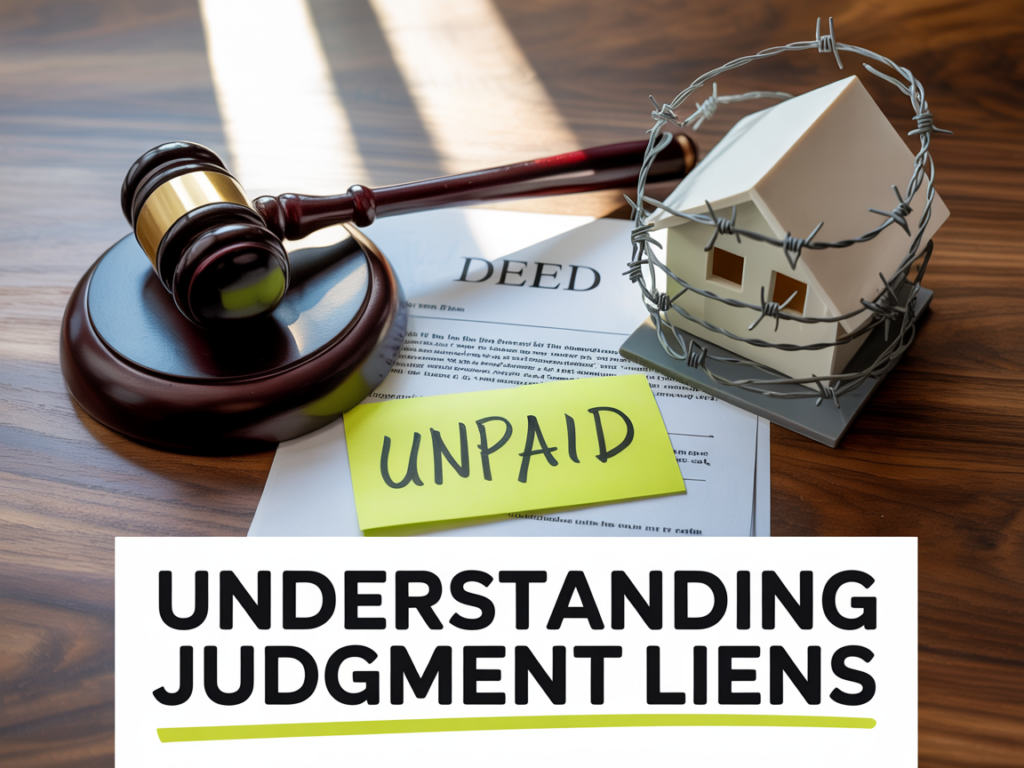
A judgment lien is a legal claim on a property that comes from a court ruling. Someone sued the property owner and won. The court ordered the owner to pay a certain amount. When that judgment gets recorded with the county, it attaches to the owner’s real property. Now the property cannot be sold or refinanced without dealing with that lien.
How It Differs from Other Liens
Mortgage liens are voluntary. You agreed to them when you borrowed money. Tax liens come from the government for unpaid taxes. Mechanic’s liens come from contractors who did not get paid. Judgment liens come from lawsuits. They are involuntary. The property owner did not agree to them. A court imposed them.
Common Sources of Judgment Liens
Unpaid credit card debt that went to collections and then to court. Medical bills that turned into lawsuits. Business disputes that ended in a judgment. Personal injury claims. Breach of contract cases. Any lawsuit where the court orders someone to pay money can turn into a judgment lien on their property.
How Judgment Liens Are Placed on Property
The process follows a clear path.
Step 1: The Lawsuit
A creditor files a lawsuit against the property owner. The court hears the case and rules in the creditor’s favor. The court issues a monetary judgment, say $25,000.
Step 2: Recording the Judgment
The creditor takes that court judgment to the county recorder’s office and records it. In some states, the judgment automatically attaches to all real property the debtor owns in that county. In other states, the creditor must take extra steps to attach it to specific properties.
Step 3: The Lien Attaches
Once recorded, the lien sits on the property. It stays until the debt is paid, the creditor releases it, the lien expires under state law, or the property is sold and the lien is addressed in the sale.
How Long Judgment Liens Last
Each state sets its own expiration period. Most range from 5 to 20 years. Many states allow creditors to renew the judgment before it expires. A renewed judgment lien can sit on a property for decades if the creditor keeps renewing.
Impact of a Judgment Lien on Property Ownership
Judgment liens create real problems for owners and for anyone looking to buy the property.
Clouds the Title
A judgment lien makes the title unclear. Title companies flag it. Lenders will not approve loans against the property. Buyers walk away. The property becomes hard to sell through traditional channels.
Must Be Addressed Before a Traditional Sale
In a normal real estate sale, the title company requires all liens to be paid or resolved before closing. If the lien amount exceeds the seller’s equity, the deal might not work unless the seller brings extra cash or negotiates a settlement.
Can Survive Certain Auction Sales
This is where it gets critical for auction investors. Whether a judgment lien survives a foreclosure or tax deed sale depends on the state, the type of sale, and lien priority.
Judgment Liens at Foreclosure Auctions
At a foreclosure auction, the foreclosing lien wipes out junior liens. If the judgment lien was recorded after the mortgage, it is junior and gets eliminated by the sale. If it was recorded before the mortgage, it is senior and may survive.
States Where Liens Survive Foreclosure
Some states are tougher than others. Florida is a prime example. In Florida, foreclosure sales do not automatically clear all other liens and judgments. A judgment lien recorded before the foreclosed mortgage survives the sale. Code enforcement liens from the city or county can also survive. This means you could win a property at a Florida foreclosure auction and still owe money on liens the previous owner racked up.
This is why a title search before bidding is so critical, especially in states like Florida. You need to know every lien, its recording date, and its priority relative to the foreclosing mortgage. Without that information, you are bidding blind.
How to Factor Liens into Your Bid
If a judgment lien survives the foreclosure sale, subtract the lien amount from your maximum bid. A property worth $150,000 with a $20,000 surviving judgment lien is really only worth $130,000 to you (minus your other costs). Adjust your bid accordingly.
Researching Lien Priority
Lien priority is based on recording date. Pull the county records and check when each lien was recorded. Compare those dates to the recording date of the mortgage being foreclosed. Liens recorded before the mortgage are senior. Liens recorded after are junior. Senior liens survive. Junior liens get wiped out. This one piece of information changes your entire bid strategy.
Judgment Liens at Tax Deed Auctions
Tax deed sales work differently. In most states, a tax deed sale wipes out most liens, including judgment liens. The government’s right to collect taxes takes priority over almost everything else.
But You Still Need Quiet Title
Even though the liens are technically eliminated, the former owner and lienholders can still challenge the sale. To get a clean, marketable, insurable title on a tax deed purchase, you almost always need to file a quiet title action. This is a court proceeding that confirms your ownership and eliminates competing claims. Plan for $1,500 to $5,000 in attorney fees and three to six months of waiting.
Exceptions to Watch For
Federal tax liens from the IRS are a special case. The IRS has a 120-day redemption period after a tax deed sale. If they exercise it, they can reclaim the property. Always check for federal tax liens before bidding on tax deed properties.
Some states also have redemption periods for the former property owner. During this period, the original owner can reclaim the property by paying the auction price plus interest and fees. Check your state’s laws to know if a redemption period applies and how long it lasts. You do not want to invest in repairs on a property the former owner can take back.
Dealing with Code Violation Liens
Code violation liens deserve special attention. These come from city or county code enforcement departments. The property owner failed to maintain the property, violated building codes, or ignored housing standards. The city fined them, the fines went unpaid, and now those fines are recorded as liens.
Why Code Violation Liens Are Different
Code violation liens can add up fast. Daily fines of $100 to $500 can accumulate into tens of thousands of dollars. On paper, a property might show $40,000 in code violation liens. That scares a lot of investors away.
But here is the good news. Cities and counties usually forgive most of a code violation lien if you fix the underlying problem. The city does not want an abandoned, run-down property sitting on the block. They want the problem fixed. If you buy the property and correct the code violation, the city or county will often reduce the lien to a small fraction of the original amount. In many cases, they waive it entirely.
How to Handle Code Violation Liens
Before you bid, call the city or county code enforcement department. Ask about the specific violations and the total amount of fines. Ask what their policy is on lien reduction for new owners who correct the issues. Get as much information as you can in writing.
Many municipalities have formal lien reduction programs. You submit an application, show proof that you fixed the violations, and request a reduction. The city reviews it and issues a reduced lien amount or a full release. This process can take a few weeks to a few months, but the savings are significant.
Factor the Real Cost, Not the Face Value
If a property has $35,000 in code violation liens but the city routinely reduces them to $2,000 after repairs, your actual lien cost is $2,000 plus the cost of the repairs. Do not let the face value of code violation liens scare you away from a good deal. Do your homework and find out what the real cost will be.
Get It in Writing When Possible
Some code enforcement departments put their lien reduction policies on their website. Others will provide guidance over the phone. Try to get specifics in writing, even if it is just an email confirmation of their general policy. This protects you and gives you confidence in your bid calculations.
Code Violations as Opportunity
Experienced auction investors see code violation liens as opportunity, not obstacles. Other bidders see the $40,000 in fines and walk away. You call the city, learn the real cost is $2,000, and win the property with less competition. Knowledge is the edge.
How to Check for Judgment Liens on a Property
Here is how to find judgment liens before you bid.
County Records
Search the county recorder’s office or clerk of court for any recorded judgments against the property owner. Many counties have online databases. Others require an in-person visit.
Court Records
Search state and federal court records for lawsuits involving the property owner. This gives you a broader picture of their legal and financial situation.
Title Search
The fastest and most reliable method is a title search. At EasyTitleSearch.com, our current owner searches trace the title back to the last vesting deed and reveal recorded liens for $59. Turnaround is as fast as same day. This is the most efficient way to find judgment liens, code violation liens, and any other encumbrances before you bid at auction.
Steps to Remove a Judgment Lien
If you own a property with a judgment lien or you bought one at auction, here are your options.
Pay It Off
Pay the full amount. Get a satisfaction of judgment from the creditor. Make sure it gets recorded with the county. Simple and clean.
Negotiate a Settlement
Offer less than the full amount. Many creditors accept 40% to 70% if they get cash now. Older liens have more room to negotiate. Get the agreement in writing before you pay.
File a Motion to Release
If the judgment expired or was improperly recorded, ask the court to release it. An attorney can handle this for you.
Quiet Title Action
For tax deed purchases and complicated foreclosure situations, a quiet title action resolves everything at once. The court confirms your ownership and wipes out competing claims.
Wait for Expiration
If the creditor does not renew the judgment, it eventually expires. Check your state’s statute for the expiration period. This is a passive approach and not always reliable, but it works in some situations.
Building a Lien Resolution Strategy
Smart auction investors do not just find liens. They build a plan for dealing with them before they bid.
Pre-Auction Checklist
Run a title search on every property you plan to bid on. List every lien, its type, its amount, and its recording date. Determine whether each lien survives the sale based on your state’s rules. Call code enforcement to ask about lien reduction policies. Contact judgment creditors to gauge settlement willingness. Add the net lien cost to your total investment calculation.
The Math That Matters
Here is a quick example. You find a property at a foreclosure auction. After-repair value is $200,000. The title search shows a $15,000 judgment lien recorded before the mortgage (it survives) and $25,000 in code violation liens. You call the city and learn they reduce code liens to $3,000 for new owners who fix the violations. Your repair budget is $30,000. Your true total cost is: winning bid + $15,000 judgment + $3,000 code lien + $30,000 repairs. If the winning bid is $80,000, your all-in cost is $128,000. Your potential profit is $72,000 minus holding and selling costs. That is a deal worth pursuing. Without the title search, you would not know those numbers.
When to Walk Away
Walk away when the liens make the math unworkable. If surviving liens eat up most of the profit margin, the deal is not worth the risk. Walk away when lien amounts are uncertain or disputed. Walk away when multiple creditors hold liens and negotiations would take months. There will always be another auction and another property.
Conclusion: Protecting Your Property from Liens
Judgment liens are a real risk for auction investors. But they are also manageable if you do your homework. Check the title before you bid. Know which liens survive the sale in your state. Factor lien costs into your bid price. And do not let code violation liens scare you away. Cities usually work with new owners who fix the problems.
A current owner search from EasyTitleSearch.com costs $59 and shows recorded liens fast. Same-day turnaround is available. Check the title, know the numbers, and bid with confidence.