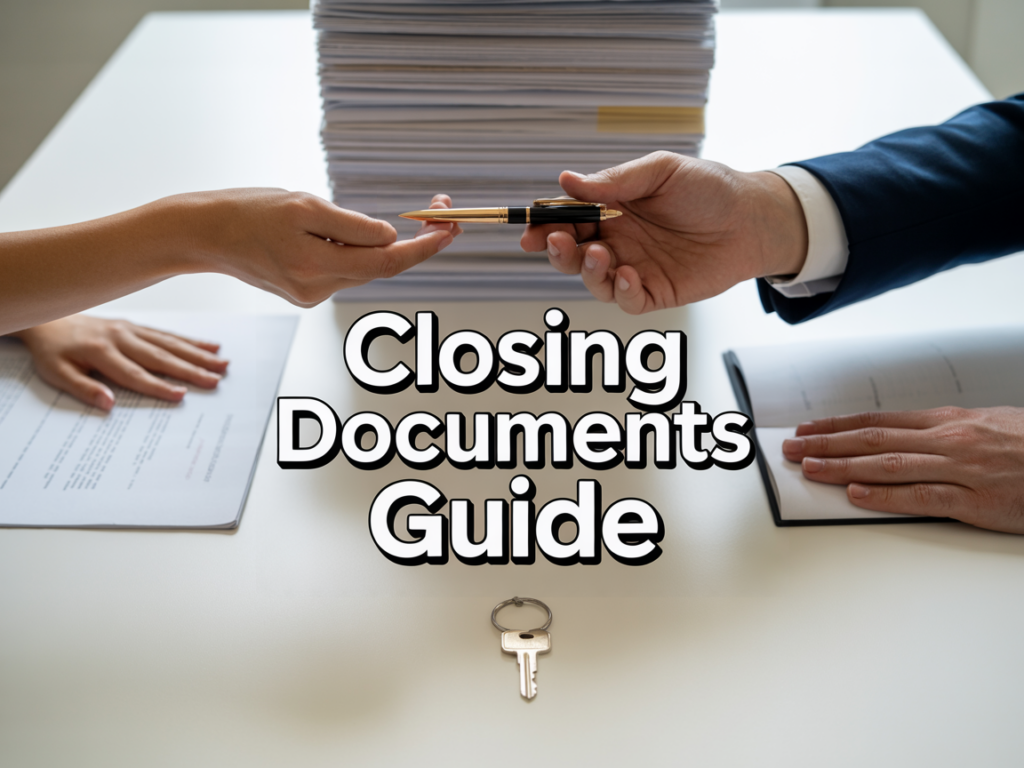
Closing day means paperwork. A lot of it. If you have never been through a real estate closing before, the stack of documents can feel overwhelming. But every document has a purpose. Knowing what each one does helps you sign with confidence instead of confusion.
This guide walks you through the essential closing documents, what they mean, and what to look for before you sign.
What Are Closing Documents?
Closing documents are the legal papers you sign to finalize a real estate transaction. They transfer ownership, set loan terms, disclose costs, and create the official record of the sale. Some protect the buyer. Some protect the lender. Some protect both.
How Many Documents Will You Sign?
A financed purchase can involve 50 to 100 documents. A cash purchase might have 15 to 25. The number depends on your state, the type of loan, and the complexity of the deal. Either way, expect to spend time at the closing table.
Key Closing Documents You Will Encounter
Let us go through the most important documents one by one.
Closing Disclosure
The closing disclosure is the most important financial document in the stack. It lists every cost in the transaction: your loan terms, monthly payment, closing costs, prepaid expenses, and cash to close.
What to Check
Compare the closing disclosure to your original loan estimate. Look for changes in the interest rate, loan amount, monthly payment, and closing costs. Small changes are normal. Big changes need an explanation. Your lender must provide this document at least three business days before closing so you have time to review it.
For Cash Buyers
Cash buyers get a settlement statement instead of a closing disclosure. It shows the purchase price, closing costs, prorations, and the total amount due. Same concept, fewer pages.
Promissory Note
The promissory note is your promise to repay the loan. It spells out the loan amount, interest rate, payment schedule, and what happens if you stop paying. This document is between you and the lender.
Key Details to Verify
Confirm the loan amount matches what you agreed to. Check the interest rate, especially whether it is fixed or adjustable. Review the payment schedule and due date. Look at the late payment penalty terms. Read the prepayment clause to see if there are penalties for paying the loan off early.
Cash Buyers Skip This
No loan means no promissory note. If you are paying cash, this document does not apply to you.
Deed of Trust / Mortgage
The deed of trust (or mortgage, depending on your state) gives the lender a security interest in the property. If you stop making payments, this document gives the lender the right to foreclose.
What It Covers
It describes the property, names the borrower and lender, and references the promissory note. It also spells out your obligations: maintain the property, keep insurance active, pay property taxes, and make your mortgage payments on time.
Trust Deed States vs. Mortgage States
Some states use a deed of trust with a trustee. Others use a mortgage document. The legal mechanics differ, but the end result is the same: the lender has a claim on your property until the loan is paid off.
The Deed
The deed is the document that transfers ownership from the seller to you. It is the most important document for establishing your legal right to the property.
Types of Deeds
A general warranty deed provides the most protection. The seller guarantees clear title and promises to defend your ownership against any claims. A special warranty deed only covers the period the seller owned the property. A quitclaim deed offers no guarantees at all. It simply transfers whatever interest the seller has, if any.
What to Check on the Deed
Verify your name is spelled correctly. Confirm the legal description matches the property you are buying. Check that the type of deed matches what your purchase contract specifies. Any error on the deed can create title problems later.
Auction Deeds Are Different
Properties purchased at county foreclosure auctions typically come with a sheriff’s deed, trustee’s deed, or certificate of title. Tax deed auction purchases come with a tax deed. These deeds offer fewer protections than a warranty deed. They transfer whatever interest the county or foreclosing party has, similar to a quitclaim deed. This is one reason auction investors need to do their own title research before bidding.
The Bill of Sale
The bill of sale transfers personal property included in the deal. This covers items like appliances, window treatments, light fixtures, or any other personal property the seller agreed to include.
When It Matters
If your purchase contract includes specific personal items, the bill of sale makes the transfer official. Review it to make sure everything listed matches what you negotiated. If items are missing, raise it before you sign.
Understanding the Closing Disclosure
The closing disclosure deserves a closer look because it contains the most critical financial information.
Page 1: Loan Terms and Costs
Page one shows your loan amount, interest rate, monthly payment, and whether any of these can increase after closing. It also shows your total closing costs and cash to close. This is the summary page. Start here.
Page 2: Itemized Closing Costs
Page two breaks down every fee. Loan origination charges, appraisal fees, title fees, government recording fees, and prepaid expenses all appear here. Each line item should have a clear description and dollar amount.
Page 3: Cash to Close Calculation
Page three shows how your cash to close is calculated. It starts with your total closing costs, adds your down payment and prepaids, and then subtracts deposits and credits. The final number is what you bring to closing.
What to Look for When Reviewing Closing Documents
Here are the things that matter most when you sit down to review.
Names and Spellings
Check every document for correct spelling of your name, the seller’s name, and the property address. A misspelled name on a deed can cause title problems years later.
Numbers and Figures
Verify the purchase price, loan amount, interest rate, and closing costs on every document. They should all match. If one document shows a different number, ask why before you sign.
Dates
Confirm the closing date, loan start date, and first payment date are all correct. Wrong dates can affect tax prorations, interest calculations, and payment schedules.
Legal Description
Make sure the legal description on every document matches the property you are buying. The legal description uses lot numbers, block numbers, and plat references, not the street address. An incorrect legal description can mean the documents technically describe a different property.
Common Issues with Closing Documents and How to Resolve Them
Problems with closing documents are more common than you might think. Here is how to handle them.
Errors in the Closing Disclosure
If the numbers do not match your loan estimate, ask the closing agent or your lender for an explanation. Small changes are normal due to prorations and final adjustments. Large changes require a new closing disclosure and a new three-day review period.
Missing Documents
If a required document is missing from the closing package, do not close without it. Ask the closing agent to obtain the missing document before you sign anything. Closing with incomplete paperwork creates risk.
Last-Minute Changes
Sometimes sellers or lenders make changes right before closing. A seller credit gets reduced. A fee gets added. If you see something unexpected, stop and ask questions. You have the right to understand every document you sign.
Title Issues Found at Closing
Occasionally, a title issue surfaces at or just before closing. A lien that was supposed to be cleared is still showing. A recording error needs correction. If this happens, the closing may need to be postponed until the issue is resolved. A preliminary title search from EasyTitleSearch.com for $59 can help you catch these issues early, before they derail your closing day.
Conclusion: Ensuring a Smooth Closing Process
Closing documents are the legal backbone of every real estate deal. Knowing what each document does and what to check for keeps you in control at the closing table.
Review documents in advance whenever possible. Check names, numbers, dates, and legal descriptions. Ask questions about anything that does not match your expectations. And always do your title research before you get to this point. A current owner search from EasyTitleSearch.com costs $59 and reveals ownership history and recorded liens. It is the fastest way to avoid title surprises on closing day or at auction.